


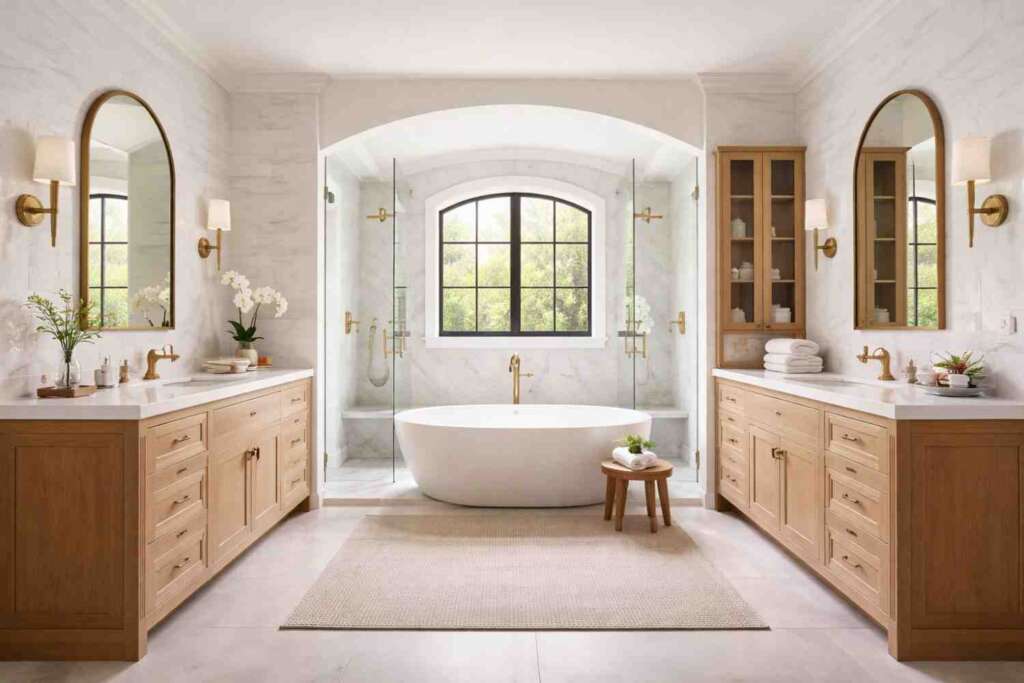
A warm bathroom combines a restrained palette, natural texture, useful storage, and lighting that supports your routine. Each choice should suit the room’s dimensions and moisture conditions.
If you are planning a bathroom renovation near Buckhead or elsewhere in Metro Atlanta, define how the room should feel and function before selecting products. These exercises will help you prepare a useful design brief.
Start With Three Layers of Color and Material
Bathrooms contain many hard surfaces. A limited palette with visible texture softens the room and keeps the design coherent. Use three layers to organize your selections:
Design layer | Possible choices | Role in the room |
Light background | Warm white, cream or soft beige | Reflects light and creates a calm base |
Grounding color | Taupe, mushroom, clay or muted green | Adds depth without overwhelming the room |
Natural texture | Wood grain, stone variation or textured tile | Introduces warmth and visible character |
Use this flexible framework according to the room’s size. Larger bathrooms may need more variation to keep broad surfaces from looking flat. Compare cabinetry, countertops, tile, flooring, and paint as one palette. Selecting each product separately can produce undertones or patterns that compete after installation.
Check Samples in Four Conditions
Showroom lighting cannot reproduce every condition inside your home. Before approving materials, place the available samples together and view them:
- In morning daylight
- Under the lighting used after sunset
- From the doorway and the main mirror position
- Both dry and lightly damp when the supplier permits it
This check may reveal a cream that looks yellow at night, a gray tile with an unexpected blue undertone, or stone veining that competes with the floor.
Plan the Vanity Around What Returns to the Counter
The vanity adds a furniture-like element. Light oak keeps the room visually open, walnut adds depth, and painted cabinetry introduces controlled color. The vanity must also fit the available width, plumbing position, doors, walkways, and storage needs.
Try the Countertop Return Exercise
Clear the vanity counter and watch what returns during the next full day. Those products need immediate-access storage. Common examples include:
- Daily toiletries and skincare
- Makeup and shaving supplies
- Hair dryers and styling tools
- Hand towels and shared products
Group the items by use. Keep daily products near the sink, towels in deeper storage, and backup supplies in a less accessible cabinet. This inventory can guide the balance of drawers, doors, dividers and vanity towers. It also identifies where plumbing or electrical clearances may reduce usable space.
Homeowners considering a modern bathroom renovation in Kennesaw can review custom and semi-custom bathroom cabinetry before deciding whether a standard vanity will meet their storage and dimensional requirements.
Use Separate Lighting for Morning and Evening
One bright ceiling fixture rarely serves every bathroom activity well. Morning routines need clear illumination around the face. Evening use benefits from softer ambient or low-level lighting.
The National Kitchen & Bath Association’s 2026 Bath Trends Report identifies task, natural and nighttime-specific lighting as important primary-bath considerations. These elements support a layered plan.
Light the Mirror for Daily Tasks
Explain how you use the mirror. Shaving, skincare, makeup, and hair styling need even light that limits harsh shadows.
Depending on the room and mirror, the plan may include:
- Sconces beside the mirror
- A fixture above the mirror
- An illuminated mirror
- Side and overhead light in a larger room
Check the apparent color of every light source. A sharply blue ceiling light beside a warm vanity light can make coordinated finishes look unrelated.
Add a Lower-Light Evening Setting
Dimmers, wall lights or discreet night lighting can support evening use without filling the room with glare. Place controls where the household can use them easily. Ask a qualified electrical professional to assess any new wiring, circuits or wet-location fixture requirements.
Coordinate Finishes Without Making Everything Match
A collected bathroom repeats selected materials and retains enough variation to feel personal.
Start with one dominant metal for faucets and shower fixtures. Add one supporting finish for lighting, mirrors, or cabinet hardware when it improves the palette. Repeat each metal so it looks intentional. Brushed brass can warm pale stone and light wood. Matte black can add definition to warm neutrals and natural textures.
Compare every finish with the material it will touch: faucet with countertop, hardware with vanity, shower fixtures with tile, and mirror frame with lighting. Adjacent materials must work together.
Carry one familiar element from the rest of the home into the bathroom. A repeated wood tone, metal finish, cabinet detail, or color from an adjoining room will help the renovated space belong to the house.
Test the Layout Against Your Daily Routine
A floor plan can hide awkward movement. Walk your designer through your routine:
- Enter the room and place clothing or personal items.
- Use the sink, mirror and vanity storage.
- Enter and operate the shower or bathtub.
- Reach for a towel.
- Dry, dress and return products to storage.
This review can reveal drawer collisions, inconvenient controls, missing towel storage and repeated movement across a wet floor. It also supports decisions about vanity clearances, shower niches, towel hooks, outlets and bench placement.
Also ask whether daily products can return to storage in five minutes, towels have room to dry, and surfaces remain accessible for cleaning.
Choose Warm Materials That Suit Bathroom Moisture
Wood tones, textiles and natural textures can soften a bathroom. Their location, finish and maintenance requirements must suit a moisture-prone room. Discuss these questions before ordering materials:
- Does the manufacturer approve the material for its location?
- Which surfaces will receive direct water exposure?
- Will the cabinetry finish tolerate humidity and regular cleaning?
- Does the exhaust fan move moist air outdoors?
The U.S. Environmental Protection Agency recommends using a bathroom exhaust fan that vents outdoors during and after showering. Ventilation, prompt leak repair, and regular drying reduce conditions that allow mold to grow. They cannot eliminate the risk.
Put the Renovation Budget Into Permanent Decisions
A budget-conscious bathroom plan prioritizes elements that affect daily use and require disruptive work to change later.
Prioritize during renovation | Easier to change later |
Vanity dimensions and storage layout | Towels and bath mats |
Lighting and outlet locations | Decorative accessories |
Countertop and sink configuration | Cabinet hardware |
Shower layout and controls | Wall color |
Flooring and wet-area materials | Artwork |
Ventilation | Freestanding organizers |
Before requesting a quote, identify three problems the renovation must solve, three features you value most, and any fixtures or materials you want to retain.
When comparing affordable bathroom renovation services in Atlanta, review the scope behind the price. Ask which materials, design work, installation, trade coordination, and final adjustments the proposal includes. Account for any essential work excluded from the initial figure.
Create a Bathroom Around the Way You Live
A warm bathroom does not depend on adding more decorative objects. It comes from coordinated materials, controlled lighting, storage that reflects your habits, and a layout that supports the room’s daily use.
Signature Cabinetry & Design provides in-house design guidance, cabinetry selection and installation for bath renovations in Atlanta, Buckhead, Kennesaw and nearby communities. Explore its bathroom renovation services or schedule a consultation to discuss your layout, storage needs and preferred atmosphere.
FAQs
How can I make a bathroom feel warm without making it dark?
Use a warm white or light neutral as the main background. Add depth through wood grain, muted color, textured tile, and warm metal finishes. Test the complete palette under the room’s daytime and evening lighting before ordering materials.
Can I mix metal finishes in a bathroom?
Yes. Limit the plan to one dominant metal and one supporting finish. Repeat both finishes and compare each one with the surface beside it. This creates variation without making the room look disconnected.
Can I use a wood vanity in a bathroom?
Yes, when the manufacturer approves the cabinetry and finish for bathroom use. Control moisture, repair leaks promptly, and follow the manufacturer’s cleaning instructions. Keep materials that are unsuitable for direct water exposure outside wet areas.
How can I reduce moisture and mold risk in a bathroom?
Use an exhaust fan that vents outdoors during and after bathing, repair leaks promptly, and allow wet surfaces to dry. Appropriate wet-area materials and effective ventilation reduce moisture and mold risk without eliminating it.